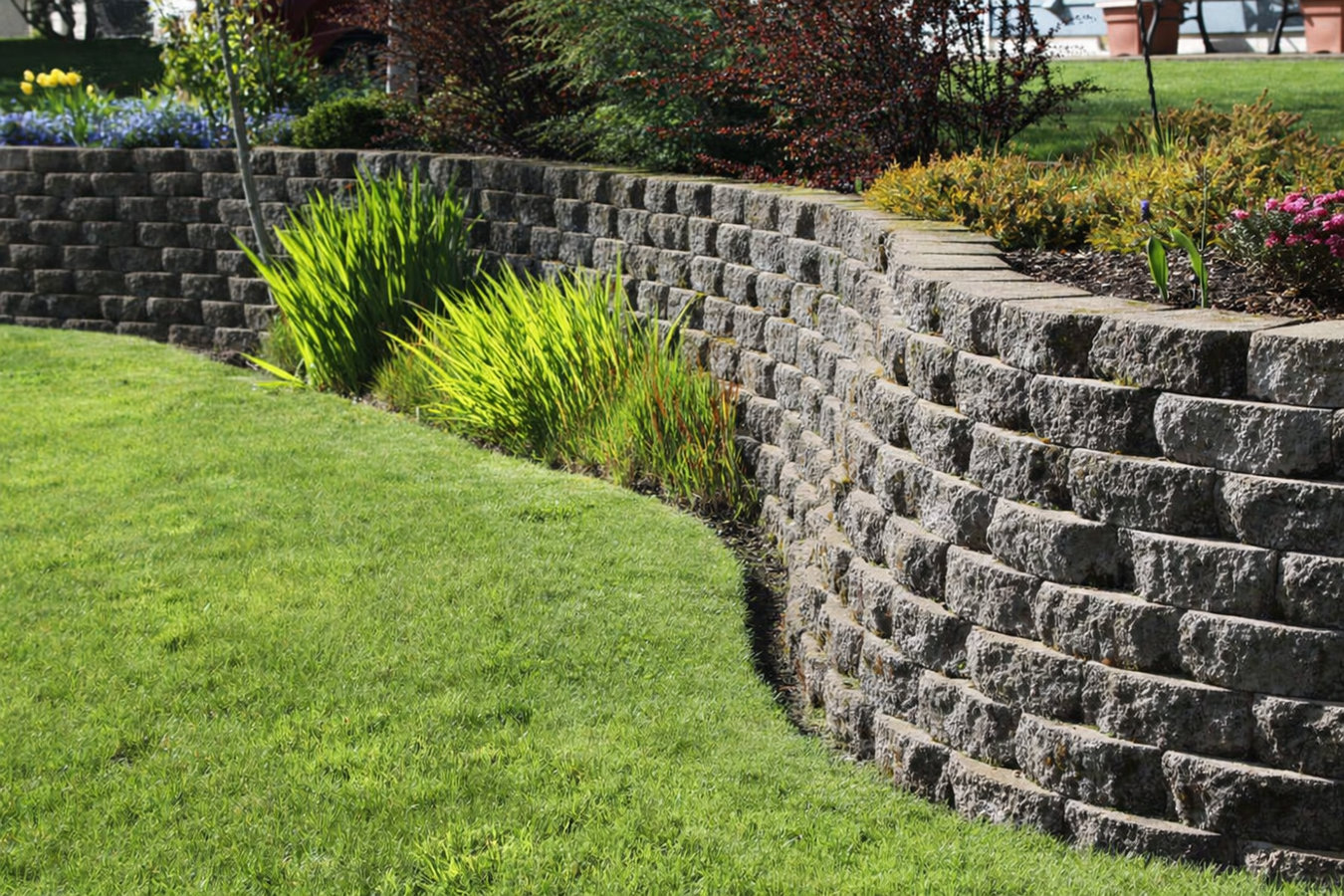
Clay soil, irrigation, and winter rain are a tough combination for anything holding back a slope. We build retaining walls with the drainage and footings that local conditions actually require - walls that stay put for decades.
Retaining wall construction in Tulare, CA holds back soil that would otherwise slide, erode, or wash toward your home, most residential walls are two to five feet tall and are built in one to three days once permits and base excavation are complete.
Most Tulare lots are relatively flat, but low-to-mid-height walls are a common need - to hold back a raised garden bed, level a backyard for usable space, or stop soil from washing toward a driveway or foundation after heavy rain. The San Joaquin Valley clay soil expands and contracts with every wet and dry cycle, which means any wall built here has to account for that pressure with proper drainage behind it.
Homeowners who need structural walls along property boundaries or to support driveway grades also ask us about masonry restoration for existing structures that can be repaired rather than replaced.
If you notice bare patches appearing after rain, or soil accumulating at the base of a slope where it did not used to be, the ground is moving. In Tulare this often happens along raised planting beds or sloped driveways after winter rains. Left alone, this erosion gets worse each season and can eventually undermine nearby hardscape or structures.
A wall that tilts away from the soil it is holding is under more pressure than it was designed to handle. Horizontal cracks running across the face of a wall are particularly serious - they mean the wall is being pushed from behind. This is a safety issue, not just a cosmetic one, and it needs a professional look before the next wet season.
Tulare clay does not drain quickly, and if your yard slopes toward your home, rainwater can collect against the foundation. A retaining wall combined with proper grading redirects that water away from the structure. Damp patches on interior walls or a musty smell in a garage after winter rains may point to this problem.
Older Tulare homes sometimes have landscape timber walls installed decades ago. Wood rots and loses its ability to hold back soil. If you see gaps between timbers, sections that have shifted, or roots growing through the wall face, the structure has reached the end of its useful life and needs to be replaced with a more durable material.
We build retaining walls from concrete block, natural stone, and poured concrete depending on the load requirements, height, and look you want. Every wall starts with proper footing excavation and a drainage layer behind each course - gravel backfill and a perforated drain pipe at the base so water has somewhere to go when the rains hit. For walls over four feet we coordinate permit applications with the City of Tulare or Tulare County so you do not have to navigate that process yourself.
We also pair retaining wall projects with masonry restoration when a portion of an existing structure can be salvaged rather than fully replaced, and with concrete block walls for property boundary walls that need both structural integrity and a clean finished look. Combining scopes saves mobilization cost and keeps material and finish consistent across the job.
The most common choice in Tulare - strong, economical, and well-suited to the load demands that clay soil puts on a wall.
A good fit for homeowners who want a wall that blends into landscaping or adds curb appeal to a front-facing slope.
Required when wall height triggers permit and plan review - we handle the permit process and build to the engineered specifications.
Lower walls that define raised planting areas or create tiered levels in a backyard - typically at or below the permit threshold.
The San Joaquin Valley clay soils beneath most Tulare lots swell when wet and shrink when dry. That cycle puts more lateral pressure on a retaining wall than sandy or loamy soil ever would. A wall that looks fine in October can show signs of leaning by February if the drainage behind it was not done properly. That is why we install drainage gravel and a perforated drain pipe behind every wall we build - water has to have somewhere to go when the winter rains arrive fast after a long dry summer.
Many Tulare residential lots also have irrigation running through them year-round, which adds to the moisture load behind any wall. We ask about irrigation layout before any excavation starts so we can work around existing lines rather than cutting through them. We work with homeowners across the Tulare area, including Porterville and Visalia, where the same clay soil conditions apply. The National Concrete Masonry Association publishes design guidance for segmental retaining walls that informs how we size footings and select materials for each job.
We reply within one business day and schedule an on-site visit to measure the slope, check for irrigation lines and utilities, and ask how you plan to use the space behind the wall. No price is given until we see the property.
You receive a written estimate covering labor, materials, drainage, and any permit fees. If your wall will be over four feet we tell you upfront - permit review adds two to four weeks, and we factor that into the schedule.
We call 811 to have underground utilities marked before breaking ground. The crew excavates to the right depth for the footing, sets the base course, and begins building up the wall with drainage gravel behind each course.
Once the wall is complete we backfill with compacted soil, restore the grade, and clean the site. We walk you through the drainage outlet location so you know what to check after the first rain. Most projects are complete in one to three days of wall construction.
Free on-site estimate. Written quote before any work starts. Permit process handled for you.
(559) 837-6698We install gravel backfill and a perforated drain pipe behind every retaining wall. Water that has nowhere to go saturates clay soil and pushes walls outward - getting the drainage right on day one is what keeps walls plumb and stable through years of wet winters.
San Joaquin Valley clay is one of the more demanding soils for any masonry structure. We size footings and drainage systems for what the soil here actually does across seasons - not a one-size-fits-all design that may show problems within a few years.
Retaining walls over four feet require a permit in Tulare, and that requirement catches a lot of homeowners off guard. We handle the City of Tulare or Tulare County application, coordinate plan review, and schedule work only after approvals are confirmed. No mid-project stops.
Most Tulare residential lots run irrigation through the yard year-round. Before we dig we locate and mark your lines so your drip system and spray heads are exactly where you left them when the job is done. A reputable masonry contractor calls 811 before breaking ground - we always do.
Every retaining wall we build is designed to perform through Tulare seasons - the dry summers that pull moisture from the clay and the wet winters that put it right back. That local knowledge is what keeps our walls standing straight for decades.
Repair and restore aging masonry structures - walls, columns, and surfaces - when replacement is not the right answer.
Learn MoreBuild freestanding block walls for property boundaries or privacy that hold up to Central Valley conditions.
Learn MoreBeat the rainy season - get your wall built and fully settled before November arrives. Free estimate with no pressure.