A block wall is only as good as the footing underneath it. We dig deeper, account for Tulare clay, and build walls that stay straight through wet winters and dry summers - with permits handled for you.
Concrete block wall construction in Tulare, CA starts with a poured footing sized for local clay soil conditions, then stacks and mortars blocks in overlapping rows to create a durable boundary or retaining structure, and most residential walls take two to four days of active construction once the permit is approved and the footing has cured.
Block walls are one of the most common masonry projects in Tulare - for property lines, yard dividers, raised planters, and anywhere a homeowner needs a structure that holds up to the heat and does not rot, warp, or need repainting the way a wood fence does. The clay soil throughout Tulare County is the main variable that separates a wall that lasts from one that leans within a few seasons.
Homeowners who need a wall to hold back a sloped grade often ask us about retaining wall construction alongside standard block walls, and those planning a perimeter enclosure sometimes pair the project with foundation block wall installation when the structure connects to the home's foundation.
Stand at one end of your wall and look down its length - if it curves or leans rather than running in a straight line, the wall has moved. In Tulare, clay soil expanding and contracting with seasonal irrigation and rain cycles is the most common cause. A wall that has shifted more than an inch or two from vertical is unlikely to correct itself and needs a professional evaluation before it fails.
White chalky staining on the face of a block wall means water has been moving through it and depositing minerals on the surface. In Tulare this is common near irrigation lines or in lower-lying neighborhoods. If the mortar between blocks is also crumbling or has gaps you can poke a finger into, the wall's structural integrity is being compromised and it is time to call someone.
Wood fences in the Central Valley take a serious beating from heat and UV exposure. Many Tulare homeowners switch to block when a fence finally fails because the long-term maintenance is far lower - no repainting, no rot, no panels blowing out in high wind. A block wall built on a proper footing will outlast multiple cycles of wood replacement.
If you notice soil bulging at the base of a wall or dirt pushing through gaps between blocks, the wall is no longer holding back earth the way it should. This is a safety concern, not just a cosmetic one - a wall compromised by soil pressure can fail suddenly. Have a mason assess the situation before doing any digging or landscaping work nearby.
We build new concrete block walls from the footing up - digging a trench, pouring a concrete base sized for local soil conditions, and stacking block in courses with consistent mortar joints. On taller walls we add steel rods through the cores and fill them with concrete grout for added strength, and we pull permits from the City of Tulare Building Division whenever the wall height triggers that requirement. Every wall gets a cap course on top to seal the hollow cores from water.
We also repair and assess existing walls - evaluating whether a leaning or cracked wall needs full replacement or targeted repair. For homeowners who need a wall that holds back a slope rather than just serving as a boundary, we handle retaining wall construction with proper drainage behind every course, and for structures connected to a home's perimeter we combine block wall work with foundation block wall installation so the entire system is built to the same standard.
The most common residential block wall project in Tulare - a durable alternative to wood fencing with far lower long-term maintenance.
Suits homeowners who want to raise a planting area or create defined levels in the yard without the weight and complexity of a full retaining structure.
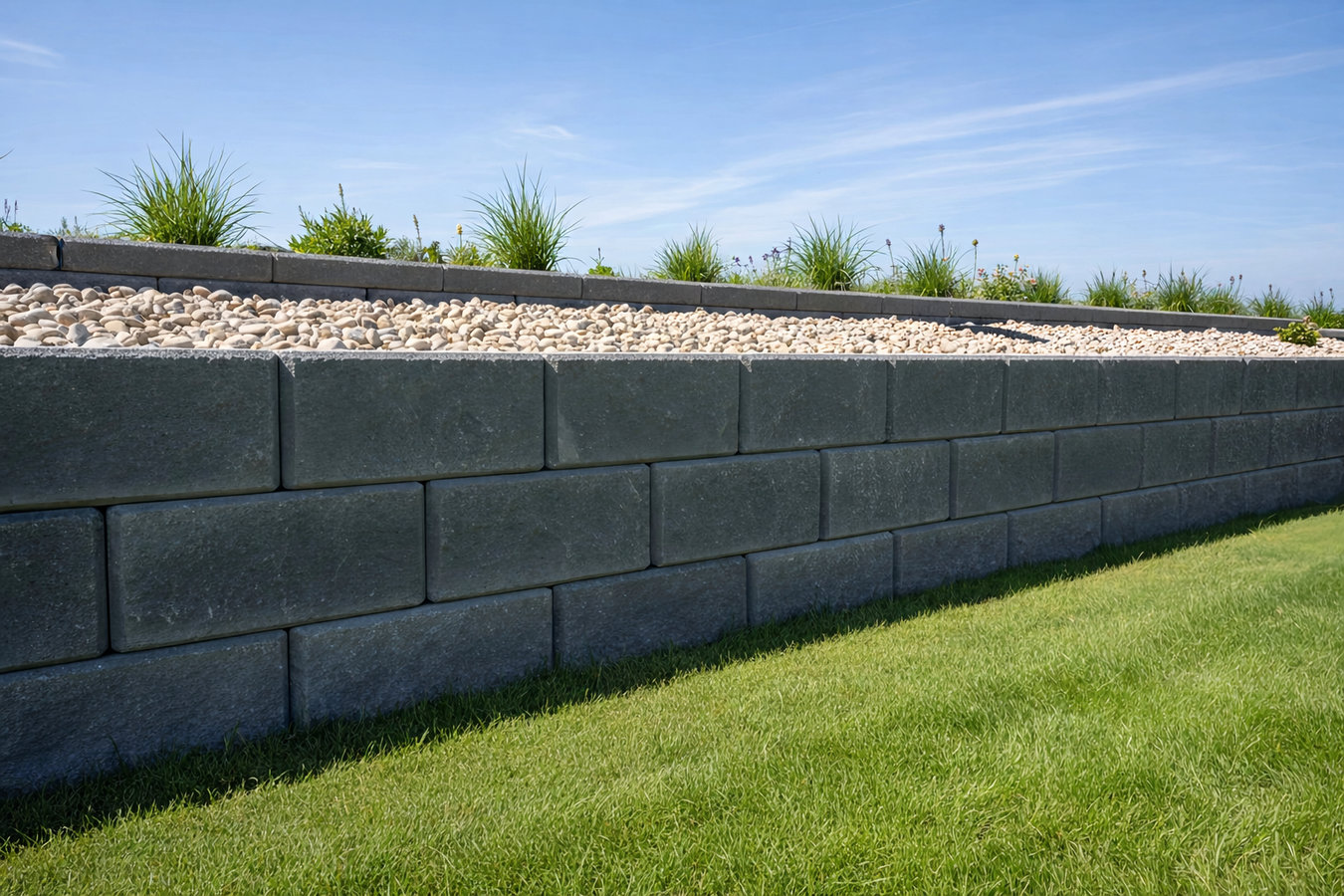
A good fit for yards with grade changes where soil needs to be held back - built with drainage gravel and a perforated drain pipe at the base.
For existing walls that are cracking, staining, or showing movement - we evaluate whether targeted repair or full replacement is the right call.
Tulare sits on clay-heavy soils that expand when wet and contract when dry - that repeated cycle puts more stress on a block wall footing than sandy or loamy soil ever would. A footing that is too shallow or too narrow will shift with the soil beneath it, and within a few wet-dry cycles you will see the wall start to lean. We dig to a depth that accounts for local conditions and compact the material beneath the footing before pouring, so the wall has a stable base even through the Valley's irrigation season and the occasional heavy winter rain. Tulare summers regularly exceed 100 degrees, which also affects how we manage mortar during construction - we work in the cooler morning hours and keep fresh mortar from drying out too fast.
Newer subdivisions on the north and east sides of Tulare often have HOA rules that govern wall height, materials, and finish - so we ask about HOA requirements during the estimate visit before any design is finalized. We serve homeowners across the broader area, including Hanford and Lemoore, where the same San Joaquin Valley soil conditions apply. The Portland Cement Association provides technical guidance on concrete masonry units and footing design that informs how we size and specify each wall we build.
We reply within one business day. You do not need to know exact dimensions - a rough idea of where the wall will go and how tall you are thinking is enough for an initial conversation.
We visit your property to measure the site, check soil conditions and drainage, and look at any grade changes. You receive a written estimate that breaks down the cost. We also ask about HOA requirements upfront so there are no surprises after the city permit is approved.
We submit the permit application to the City of Tulare and handle all follow-up. Once approved - typically one to three weeks - we excavate the trench and pour the footing. A city inspector checks the footing before we begin stacking block.
We stack and mortar each course, add steel reinforcement where required, and finish with a cap row to seal the top. The city conducts a final inspection. We clean the site and walk you through the finished wall before we leave.
No vague numbers - just a clear, itemized quote based on your yard and Tulare soil conditions. No obligation to request yours.
(559) 837-6698We have built block walls throughout Tulare County and know that the clay soil here demands deeper footings than contractors from outside the area typically spec. We size every footing based on what the local ground actually does - not a generic calculation.
We submit the permit application, coordinate the footing inspection, and schedule the final walkthrough with the City of Tulare Building Division. You do not have to make a single call to the building department or track where things stand.
Many of Tulare newer subdivisions have HOA rules on wall height and materials. We ask about your association requirements during the estimate visit - not after work starts - so the wall we build passes both city inspection and HOA review.
You receive a written quote that breaks down materials, labor, permit fees, and any soil prep before we touch your yard. Homeowners in Tulare have been burned by vague estimates that grow mid-job. Ours do not.
A block wall that stays straight for decades starts with the decisions made before the first block is set - footing depth, soil prep, drainage, and permits. Those are the details we get right on every project. Confirm any California masonry contractor holds a valid license at cslb.ca.gov.
Block wall systems that tie into your home perimeter, built to the same footing and reinforcement standards as freestanding boundary walls.
Learn MoreEngineered walls with drainage gravel and perforated drain pipe for yards where soil needs to be actively held back rather than just divided.
Learn MorePermit slots at the City of Tulare fill up - request your estimate now and lock in a start date before the next wet season stresses your yard.